
Most people who visit Angkor come away wishing they had done it differently. Not because the temples disappointed them, but because they ran out of time, underestimated the heat, tried to see too much in one day, or spent their visit navigating crowds instead of actually looking at what they came to see.
We live here. This is what we would tell a friend before they went.
Start earlier than you think you need to. Hire a guide for at least one day. Do not try to see everything. And when the midday heat arrives, go back to your hotel, eat lunch, rest, and return at 3pm. Almost no travel guide says that last part clearly enough. The difference between a visitor who follows that rhythm and one who pushes through the midday heat is the difference between someone who remembers Angkor with awe and someone who remembers being exhausted and vaguely overwhelmed.
What You Need Before You Go
An Angkor Pass is required for every temple in the park. Buy it online at the official Angkor Enterprise portal before you arrive. A soft copy on your phone is accepted at all checkpoints.
- One-day pass: $37
- Three-day pass: $62
- Seven-day pass: $72
- Children under 12: free with passport
Multi-day passes do not need to be used on consecutive days. If you buy your pass after 5pm it becomes valid the following day, but you can use it for sunset viewing at Phnom Bakheng on the day of purchase.
Most temples open at 7.30am and close at 5.30pm. Angkor Wat and Phnom Bakheng open at 5am. Angkor Wat now closes at 6pm.
About the Heat
This needs saying directly because most visitors from Europe, North America, and Australia are not prepared for it.
Between March and May temperatures regularly hit 35 to 38 degrees. You will be walking on stone that has been absorbing sun since dawn, with long exposed sections between shade. There is no air conditioning. The heat does not just make you uncomfortable, it shortens your attention span, drains your energy, and turns what should be a profound experience into an endurance exercise.
Even in the cooler months of November to February, midday at the temples is unpleasant. The stone radiates. Tour groups are at their densest. The light is flat and harsh.
The practical solution is simple. Start at dawn. Do your most significant temples in the first three hours of the day when it is cooler, the light is better, and the crowds are thinner. Go back to your hotel by noon. Eat, rest, shower. Return at 3pm. The temperature drops, the light turns golden on the sandstone, and most tour groups have gone back to Siem Reap. This is how people who live here visit the temples. It is also how you get twice as much from the same pass.
The Routes
The park is built around two established circuits that make navigation straightforward.
The Small Circuit covers the major temples in the central cluster across approximately 17 kilometres. This is the right route for day one. The key stops are Angkor Wat, the South Gate of Angkor Thom, Bayon, Baphuon, the Terrace of the Elephants, Ta Keo, Ta Prohm, and Banteay Kdei.
Not all of these are equal. Angkor Wat, Bayon, and Ta Prohm are genuinely unmissable. Ta Keo is interesting but unfinished and relatively plain compared to what surrounds it. Banteay Kdei is peaceful and worth a short stop. Baphuon is significant but undergoing ongoing restoration. If you are short on time, put your hours into Angkor Wat, Bayon, and Ta Prohm and move more quickly through the rest. Individual pages for each temple are in the Temples section of SiemReapLife.com.
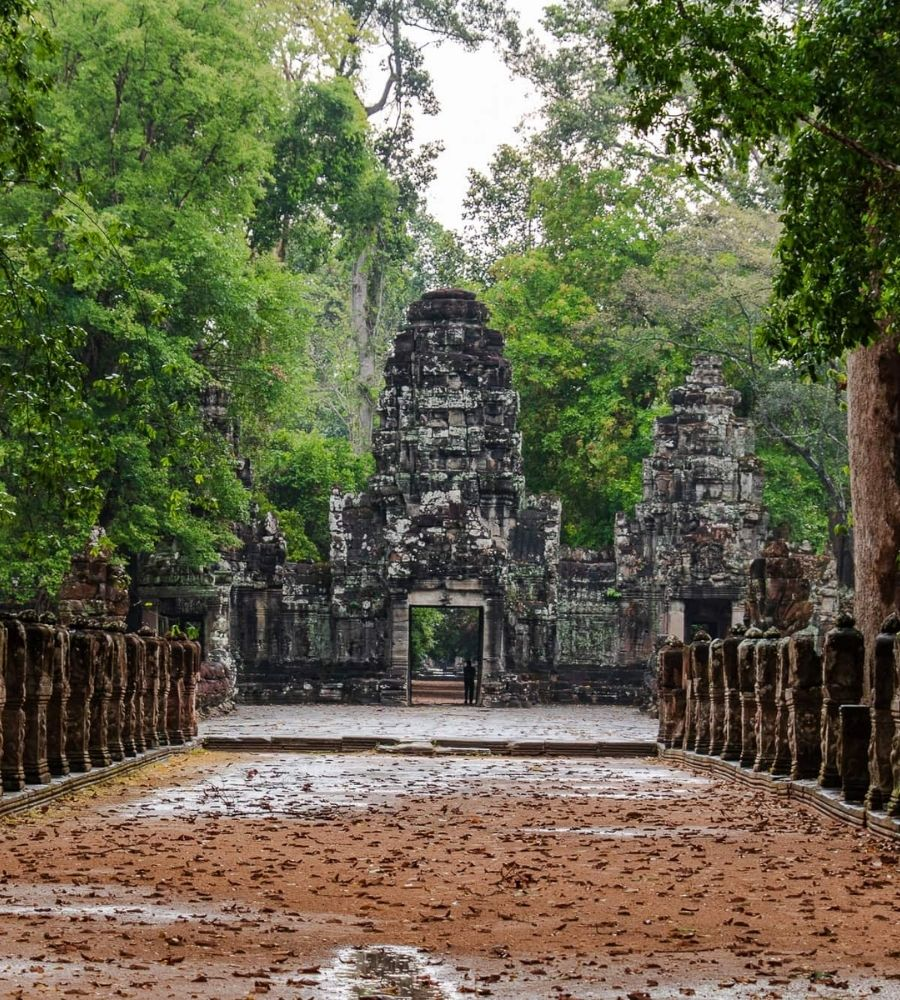
The Grand Circuit extends outward to the lesser-visited temples beyond the central cluster, covering approximately 26 kilometres. The major stops are Preah Khan, Neak Pean, Ta Som, East Mebon, and Pre Rup. These temples receive a fraction of the Small Circuit crowds. Preah Khan, a temple city that once housed over 100,000 people, can be walked through in near silence. Pre Rup at dawn or dusk, with wide views across the jungle canopy, is one of the genuinely underrated experiences in the entire park.
Do the Grand Circuit on day two or three. It rewards curiosity rather than checklist thinking.
Hire a Guide
This is the single best thing most visitors do not do.
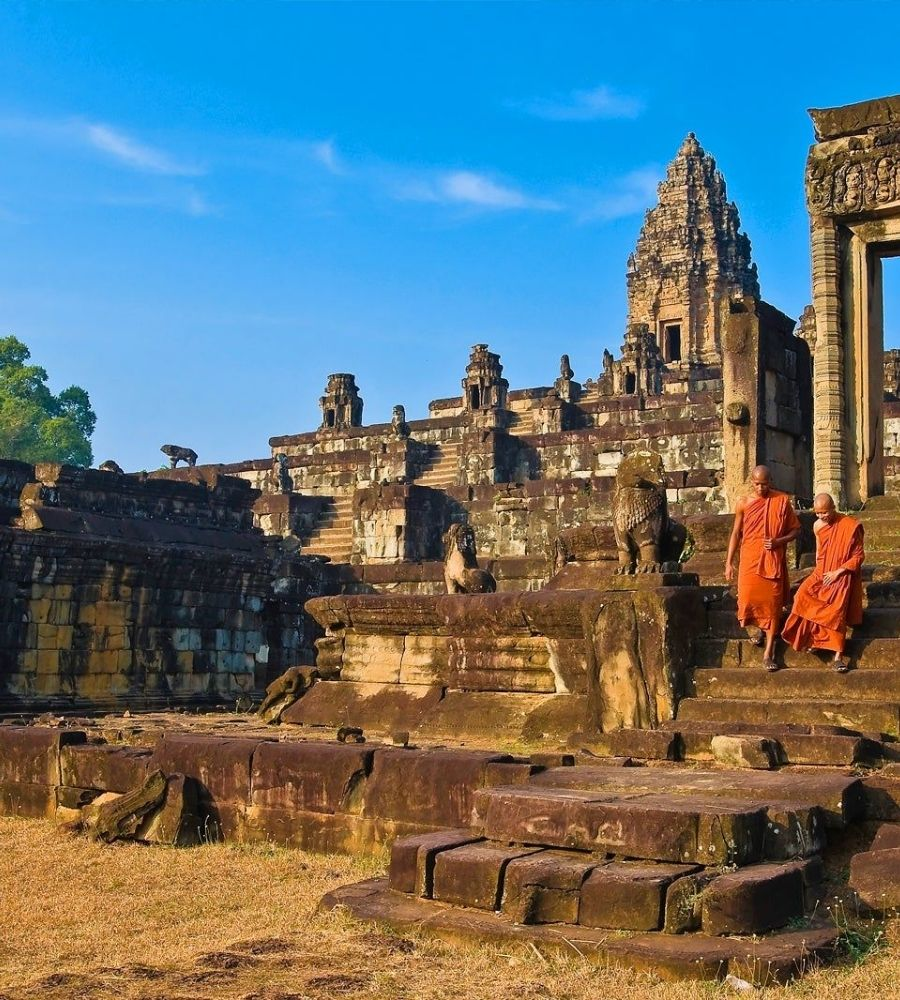
The temples are remarkable without a guide. With a knowledgeable local guide, the experience is categorically different. The bas-reliefs at Angkor Wat tell complex stories from the Hindu epics. The faces of Bayon have specific symbolic meaning. The tree roots at Ta Prohm are not random, they are part of a deliberate conservation decision with a long history. None of this is legible without context, and most visitors walk past it.
A good guide does not just explain what things are. They know which areas are quietest at which time of day. They know the corners and galleries that tour groups skip. They know when to move and when to stop. They have relationships with the temples built over years of daily visits.
What to look for: a guide who asks questions about what you are interested in rather than delivering the same script to every group. Someone who has been doing this for years rather than months. Someone whose knowledge goes beyond the standard tour stops. Your hotel or guesthouse can recommend guides they trust, or check the listings on SiemReapLife.com.
A private guide for a full day costs around $25 to $40. On a three-day pass that is less than $15 per day added to your visit. It is the highest return investment you will make on this trip.
Getting Around
Tuk-tuk: The right choice for most visitors. A full day on the Small Circuit costs around $15 to $25. Your driver will wait at each temple, knows the routes, and can adjust to your pace. Arrange through your hotel the evening before. Agree on the full price and route before you leave.
Private car: Worth it during the hot season between March and May. Air conditioning between temples is not a luxury when it is 38 degrees. Around $25 to $40 per day.
Bicycle: $3 to $5 per day. Works well for the Small Circuit in cooler months if you start early. A 45-minute ride from central Siem Reap to the temple complex. Not recommended in peak heat.
Scooter: $8 to $12 per day. Full flexibility, good middle ground.
How Many Days
One day: Possible but genuinely tight. Start at 5am, follow the rhythm above, and accept that you will be choosing depth over breadth. Angkor Wat, Bayon, and Ta Prohm is a full day done properly.
Two days: The practical minimum for most visitors. Small Circuit on day one, Grand Circuit or Banteay Srei and Beng Mealea on day two.
Three days or more: The right amount of time. Allows you to revisit temples you want more time at, reach the outer sites, and approach the whole thing at a pace that lets it actually land.
Practical Notes
Covered shoulders and knees are required at every temple at all times. Guards enforce this at all entry points. No exceptions. Lightweight long trousers and a shirt with sleeves. Bring them from the start rather than trying to change on arrival.
Bring more water than you think you need. Buy in town before you go rather than at temple stalls where prices are significantly higher.
Do not touch the carvings. The oils from hands damage stonework that has survived centuries. No drones within the archaeological park without a special permit. Angkor Wat is a smoke-free site.