
Cambodia is a deeply Buddhist country. Around 95 percent of the population practises Theravada Buddhism and the wat, or temple pagoda, sits at the centre of community life across the country. In Siem Reap you will encounter monks every day, in orange robes at the temples, walking through the markets in the early morning, or sitting quietly in the shade of a courtyard. Most visitors observe this from a distance. A Buddhist blessing ceremony is an opportunity to experience it directly.
Blessing ceremonies have been performed in Cambodian temples for centuries, on auspicious dates, for special occasions, and for anyone who comes seeking one. They are not performances staged for tourists. They are genuine religious rituals conducted by resident monks, and visitors are welcomed with the same openness that characterises Cambodian Buddhist culture generally.
What Happens
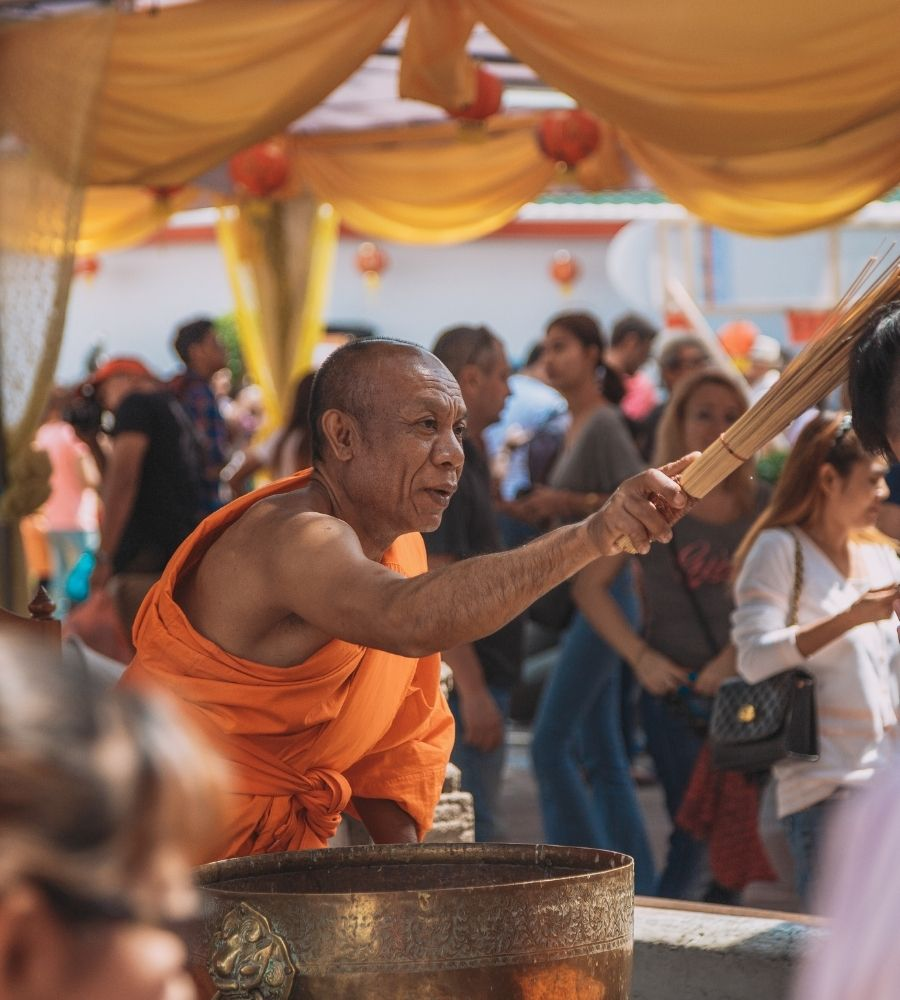
The ceremony takes place at a temple pagoda, typically outside the main tourist circuit and away from the crowds. You will be asked to remove your shoes and, if taking the full water blessing, change into a sarong provided at the temple. Monks chant ancient verses invoking blessings for good fortune, safe travel, and long life.
There are typically two forms of blessing available. The first involves a light sprinkling of sacred water while the monks chant. The second is a more immersive ritual where vessels of blessed water are poured over your head. If you choose the second, you will get thoroughly wet. Bring a towel and a change of clothes or wear something you do not mind being soaked. At the end of the ceremony a sacred red string is tied around your wrist, signifying the blessing received.
The whole experience runs around one to one and a half hours including travel. Many visitors describe it as the most meaningful experience of their trip to Siem Reap, not because it is dramatic, but because it is quiet and genuine in a way that temple sightseeing rarely is.
How to Arrange It
The most common way is through a guided tour, which includes hotel pickup, transport, a guide who explains each element of the ceremony, and the blessing itself. Tours typically cost around $35 per person.
Two temples commonly used for visitor blessings are Wat Athvear, a 12th century Angkorian temple south of Siem Reap set among rice fields on the road toward the Tonle Sap, and Wat Arang Pagoda, a working monastery in the countryside that offers both the light sprinkling and full water immersion options. Both welcome visitors warmly. Wat Athvear suits those who want a more historically significant setting alongside the blessing. Wat Arang is better known for the full water blessing experience.
If you prefer to go independently, your hotel or guesthouse can often make a direct arrangement with a local temple. This requires more initiative but results in a more personal experience. A small donation to the temple, typically in the form of food or supplies for the monks and those they support, is appropriate and expected regardless of how you arrange it.
What to Know Before You Go
Dress modestly from the start. Covered shoulders and knees are required at all temples. Remove shoes before entering any indoor temple space. Women should not touch monks or hand anything directly to them. Ask your guide before photographing the ceremony and keep your phone away during it unless you have confirmed otherwise.
This is an active religious site and an active religious practice. Approach it with the respect and curiosity it deserves and it will give you something that no temple ruin can.