
Phnom Kulen
Every temple at Angkor was built from sandstone quarried here. The rivers that flow down from this plateau provided the water that sustained the Khmer Empire’s agricultural system for six centuries. And it was here, in 802 CE, that King Jayavarman II declared himself a god-king, unified the Khmer people, and gave birth to the civilisation that built Angkor Wat. Phnom Kulen, the Mountain of the Lychees, is considered the most sacred mountain in Cambodia. It is also one of the most rewarding day trips from Siem Reap, combining genuine historical significance with a waterfall you can swim in, a river of ancient carvings you can wade through, and views across the jungle that most visitors to Cambodia never see.
It is a full day out. Plan accordingly.
What to See
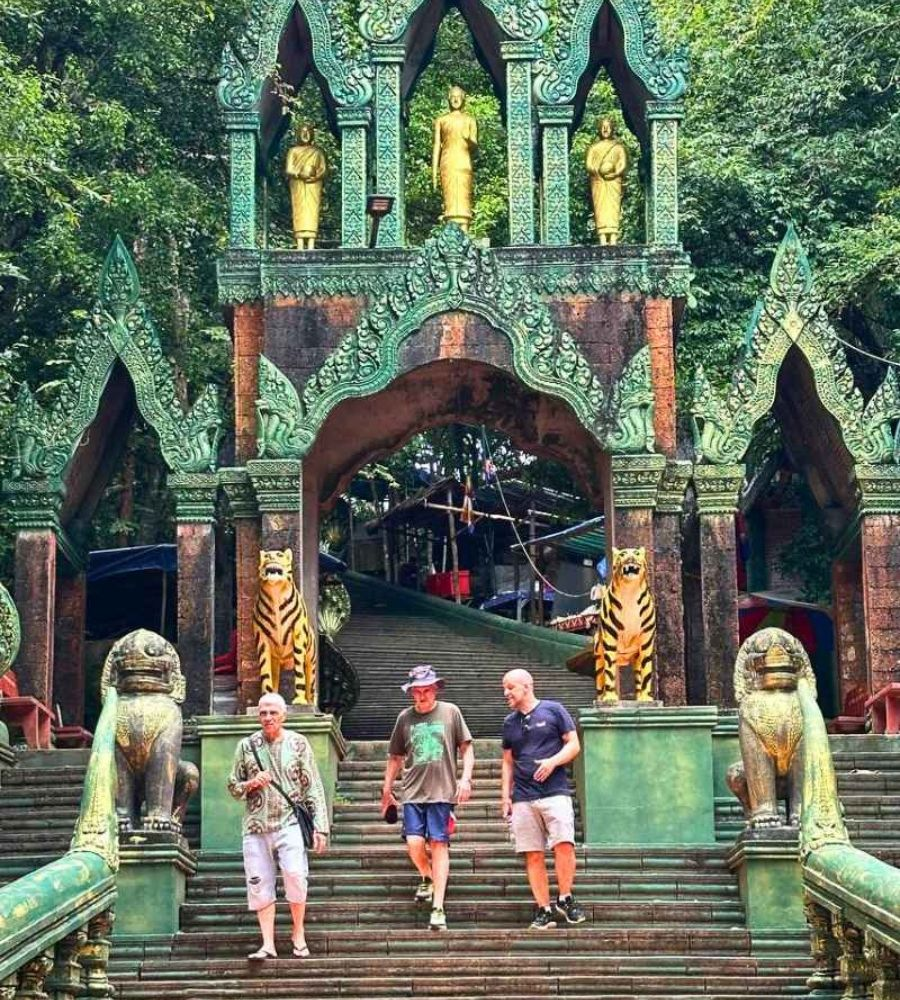
Preah Ang Thom and the Reclining Buddha: The first stop on the plateau. A pagoda built around a massive natural sandstone boulder, with a 16th century reclining Buddha carved directly into the rock. The figure is around eight metres long and is one of the most significant pilgrimage sites in Cambodia. Cambodians travel here in large numbers on weekends and national holidays to pray and make offerings. Climb the staircase to the upper level for views across the jungle canopy. Remove your shoes before entering the pagoda. This is an active place of worship, not a tourist attraction in the conventional sense. Behave accordingly.
The River of a Thousand Lingas: A short walk from the Buddha leads to one of the most unusual sacred sites in Southeast Asia. Look into the clear shallow water of the riverbed and you will see hundreds of lingas, phallic symbols representing the Hindu god Shiva, carved directly into the rock, pointing downstream. Between them are carvings of Vishnu, Brahma, and other Hindu deities. The ancient Khmers sanctified the water here at its source, believing that it flowed down to bless the Angkor plain below. Standing in the river looking at a thousand year old carving beneath your feet while the water runs over it is a genuinely strange and memorable experience. The riverbed can be slippery. Move carefully.
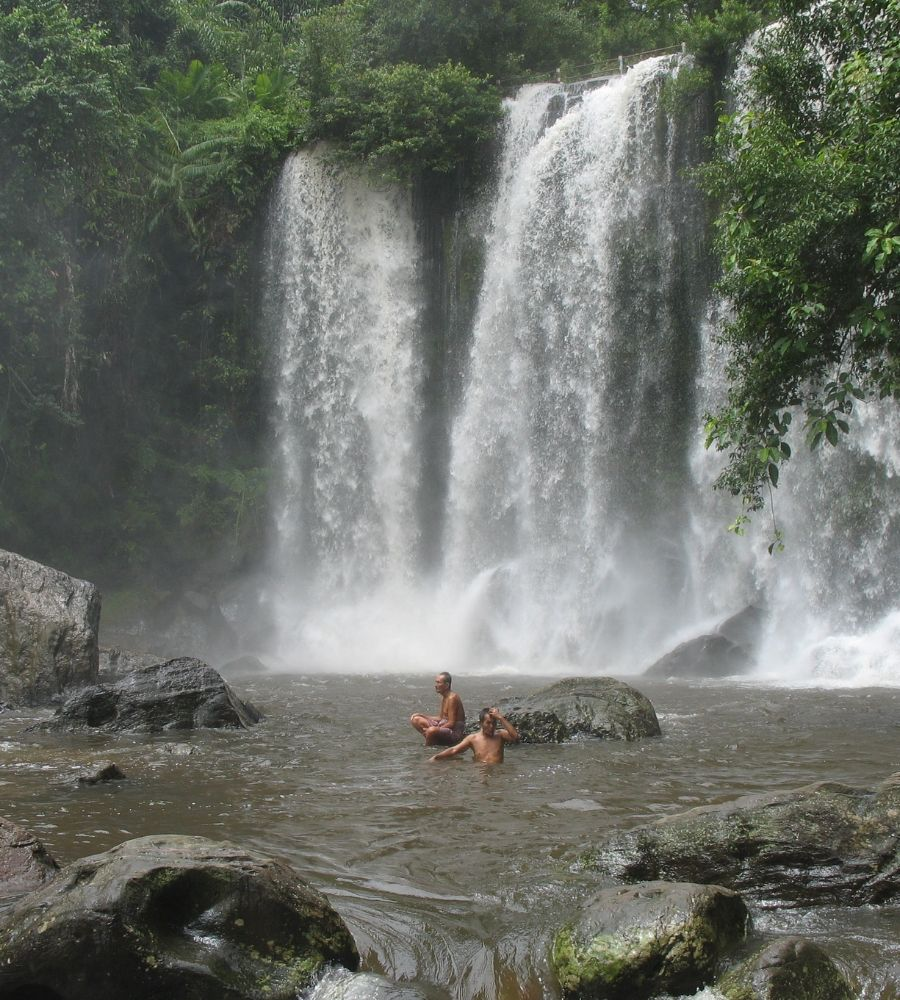
The Waterfall: The main waterfall on Phnom Kulen drops in two tiers, the upper fall around five metres wide and the lower fall reaching fifteen to twenty metres in height depending on the season. The pool at the base is where the day exhales. Cambodian families spread out on the rocks, children jump from ledges, and the noise of the water drowns everything else out. It is genuinely joyful in a way that temple sites rarely are. Lockers and changing facilities are available nearby. Bring a swimsuit. In the wet season the falls are dramatic and the water is fast. In the dry season the volume drops but the swimming is calmer and the rocks around the pool are easier to navigate.
The Plateau Viewpoint: On the road up the mountain there is a rocky viewpoint overlooking the surrounding jungle and countryside. Most drivers stop here automatically. If yours does not, ask. It is worth five minutes.
The Lost City of Mahendraparvata: In 2013 archaeologists using LIDAR technology revealed the layout of an ancient city on the slopes of Phnom Kulen that predates Angkor Wat by roughly 350 years. Most of it remains under jungle and is not accessible to visitors, but knowing it is there changes how you look at the plateau. This mountain was not just sacred. It was once a city.
Critical Logistics
Leave your hotel by 8am at the latest. The road up Phnom Kulen operates on a strict one-way system. Traffic goes up only until around 11am to noon. After noon, traffic comes down only. If you miss the cutoff you cannot drive up. Earlier is better.
Tuk-tuks cannot make the steep climb. You need a private car, van, or powerful motorbike. Most hotels and guesthouses in Siem Reap can arrange a car with driver for the day. Confirm they know the timing rules before you book.
Phnom Kulen is approximately 48 kilometres from Siem Reap, around one and a half to two hours by car. It is not on the same road as Banteay Srei and cannot easily be combined with it in a single day. Plan it as a standalone day trip.
Entry
Phnom Kulen National Park requires a separate ticket from the Angkor Pass. Entry costs $20 per person for foreign visitors. Cambodian nationals enter free. The ticket office is at the base of the mountain. You can also buy tickets in advance through your hotel or online.
What to Bring
Swimsuit and towel. Sturdy shoes, the paths are uneven and the riverbed is slippery. Covered shoulders and knees for the temple and pagoda. Insect repellent. More water than you think you need. The waterfall area has food stalls and restaurants but prices are higher than in town.
Dress Code
The waterfall is a popular spot for Cambodian families. Dress conservatively when swimming. Shorts and a t-shirt rather than bikinis or speedos. When entering the pagoda, covered shoulders and knees and shoes off. This applies to everyone regardless of the heat.