
Street Food
Siem Reap is a genuinely good food city and street food is where it is at its best. The dishes are built on fresh herbs, fermented fish paste, coconut milk, and produce from the markets and farms that surround the city. Prices are low, portions are generous, and the gap between a $2 bowl of noodles from a street cart and a $15 main from a restaurant is often narrower than you expect in terms of quality. Eating well here does not require spending much.
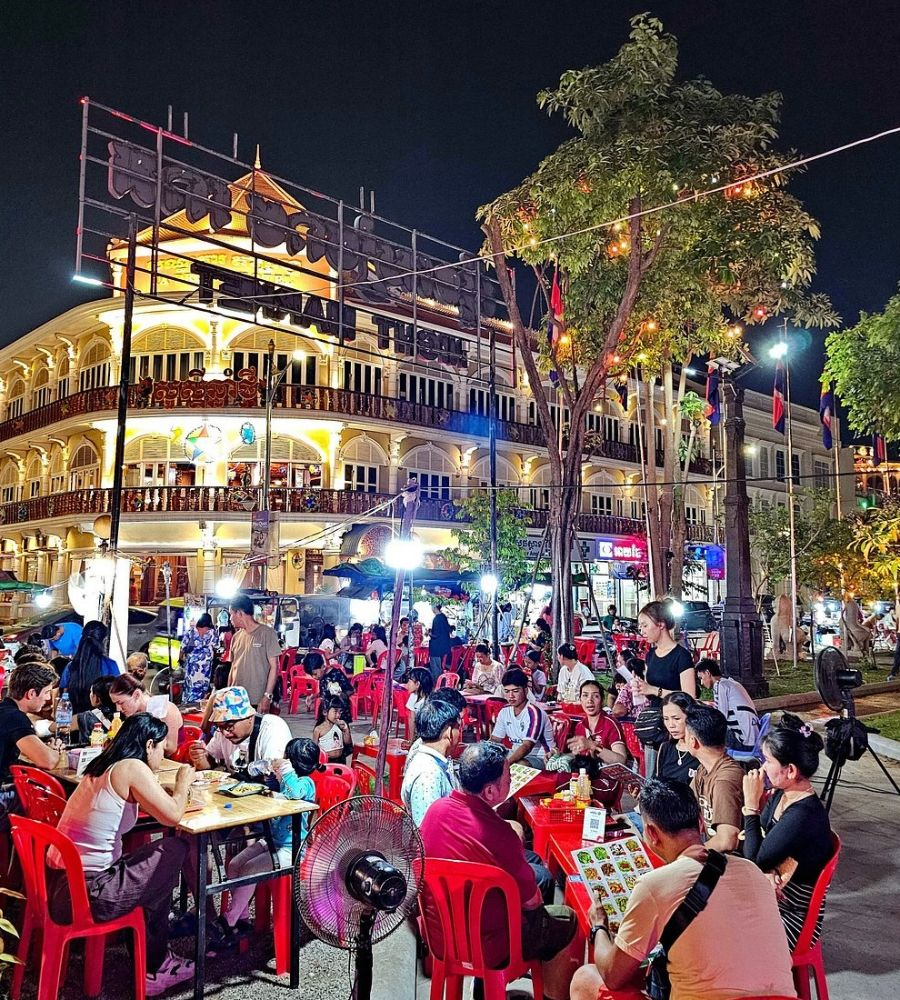
The single best thing you can do on your first evening is walk away from Pub Street, find a plastic chair at a local stall, point at something you cannot identify, and see what arrives. Most of the time it will be good. Sometimes it will be extraordinary.
What to Eat
Num Banh Chok: The breakfast of Cambodia. Fresh rice noodles, a fish-based green curry sauce, bean sprouts, cucumber, and a handful of fresh herbs. Found at stalls and carts across the city from early morning until mid-morning when it typically sells out. Light, clean, fragrant, and the correct way to start a day in Siem Reap. Around $1 to $1.50.
Fish Amok: Cambodia’s most iconic dish. Fresh fish steamed in a banana leaf or young coconut with coconut milk, kroeung spice paste, lemongrass, galangal, and kaffir lime. The texture is somewhere between a curry and a custard. Served everywhere from street stalls to fine dining restaurants. The quality varies considerably. At a good stall it costs $3 to $5 and is better than most restaurant versions at three times the price.
Lok Lak: Beef marinated overnight then stir-fried with herbs and vegetables, served with a black pepper sauce and steamed rice. French and Chinese influences worked into something distinctly Cambodian. One of the most widely eaten dishes in the city. Around $3 to $5 at a street stall.
Samlor Korko: The dish that Cambodians consider their true national dish more than fish amok. A thick, rich soup made with prahok, the fermented fish paste that underpins much of Khmer cooking, mixed with vegetables, herbs, and usually pork or fish. Found at local restaurants rather than tourist stalls. Worth seeking out. Around $2 to $3.
Lort Cha: Short, fat rice noodles stir-fried with meat, vegetables, and egg. A popular late night street food found at carts around the city from evening onward. Satisfying, quick, and cheap at around $1.50 to $2.
Bai Sach Chrouk: Grilled pork over rice, served with a light broth and pickled vegetables. The classic Cambodian breakfast alternative to Num Banh Chok. Available from early morning at local stalls. Around $1 to $2.
Mango Sticky Rice: Sliced ripe mango with sticky rice drizzled with coconut milk and toasted sesame seeds. The definitive Cambodian dessert and available at most street markets and dessert stalls. Around $1 to $2.
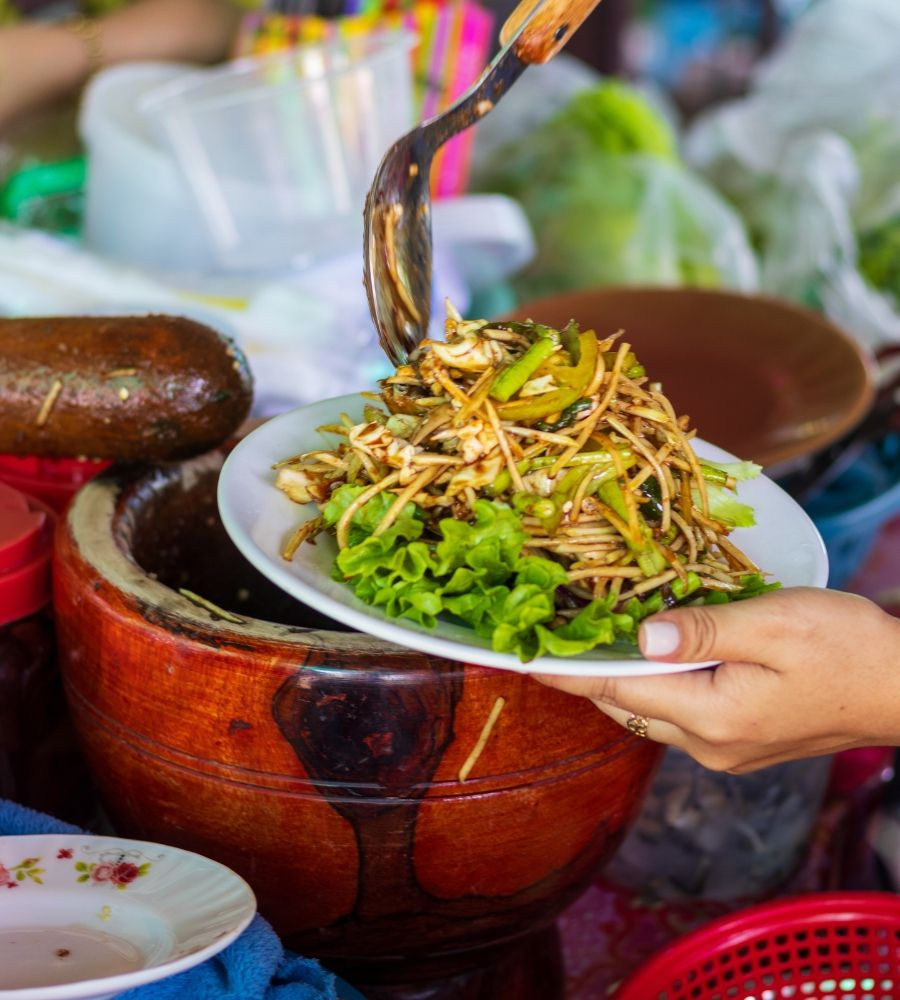
Fried Insects: Crickets, silk worms, and tarantulas are available at market stalls and are a genuine part of the local food culture rather than a tourist novelty. Worth trying at least once. Crickets are the most approachable starting point.
Where to Eat
Old Market area, Street 9: The stretch just above the Old Market is lined with Khmer eateries that exist for locals, not tourists. The menus are shorter, the flavours are less adjusted, the prices are lower, and the plastic chairs are closer together. This is where you eat if you want to understand what Cambodian food actually tastes like when nobody is softening it for a foreign audience. Around $1.50 to $3 for a full meal.
Night Market Street and the riverside: Several small family-run stalls along Night Market Street consistently earn the strongest reviews of any street food area in the city. Aly Baba is one of the most recommended spots, known for generous portions and genuine Khmer flavours at around $3 a dish. The riverside setting in the evening, with the lights on the water and a cold Angkor beer, is one of the more pleasant ways to end a day in Siem Reap.
Local morning markets: The best Num Banh Chok and Bai Sach Chrouk in the city are at the local markets in the early morning rather than at restaurants. Phsar Leu, the large local market north of the city, is where many Siem Reap residents buy their breakfast. Go between 6am and 8am.
Marum: Not a street stall but worth mentioning. A sit-down restaurant in a timber house near Wat Damnak, run by Friends International as part of their hospitality training program for disadvantaged youth. The food is inventive, beautifully presented, and genuinely excellent. Supporting it puts money into something useful. Mains around $5 to $8.
Practical Notes
Street food in Siem Reap is generally safe. Apply common sense. Look for stalls with high turnover, food cooked to order, and a crowd of locals rather than tourists. Avoid anything sitting out in the heat. Carry small US dollar bills or Riel as most stalls do not make change for large notes easily.
Cambodia has one of the most underrated food cultures in Southeast Asia. Most visitors who eat well here leave wishing they had started earlier in their trip. Start early.
A full listing of recommended restaurants and food tours is in the Food and Drink section of SiemReapLife.com.