
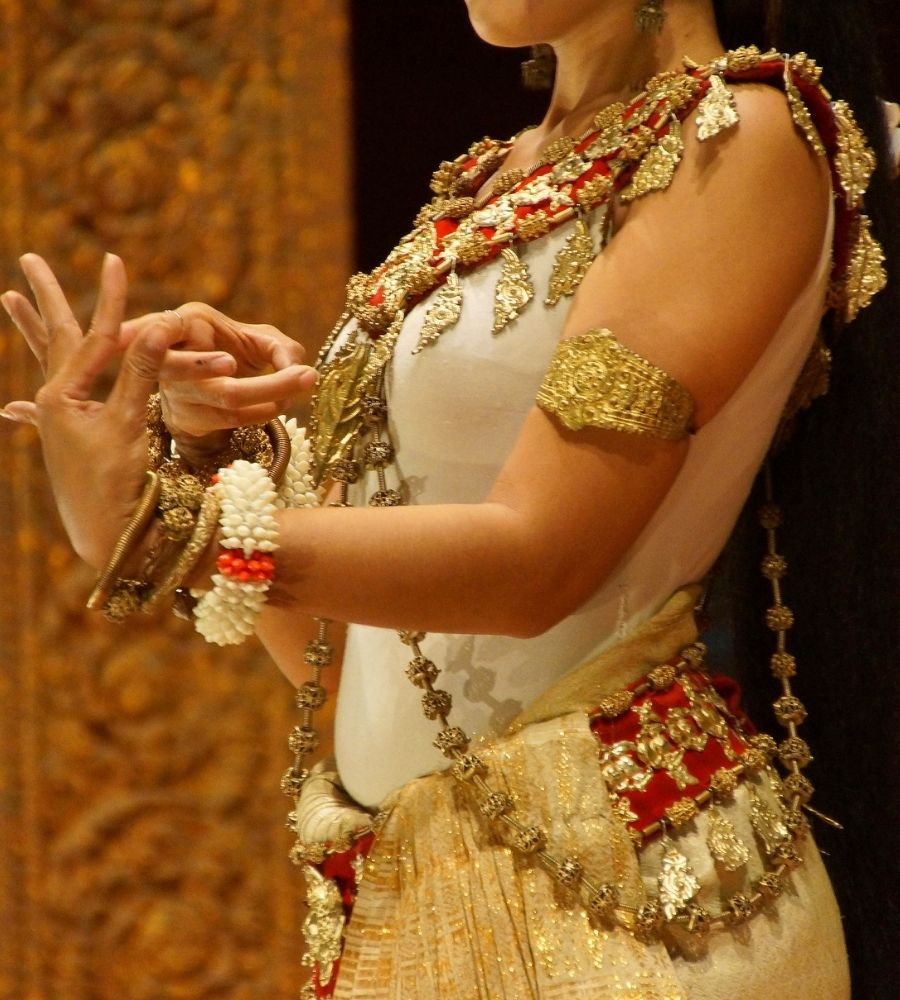
If you have spent a day at Angkor and looked carefully at the bas-reliefs, you will have seen them already. Carved into the walls of virtually every major temple are rows of female figures, hands bent back at the wrist, fingers curved upward, bodies in precise and deliberate postures. These are apsaras, celestial nymphs from Hindu and Buddhist mythology, born from the Churning of the Ocean of Milk. For centuries they were depicted in stone. Watching the dance performed live by trained Cambodian dancers is one of the most direct connections you can make between the ancient world of Angkor and the living culture of Cambodia today.
The dance is not purely ancient. The classical form as performed today was developed by the Royal Ballet of Cambodia in the mid-20th century, drawing on the temple carvings, surviving oral tradition, and the knowledge of dancers who remembered the royal court traditions. It came terrifyingly close to being lost entirely. The Khmer Rouge systematically targeted artists and performers. An estimated 90 percent of Cambodia’s classical dancers were killed or died during that period. The revival that followed was painstaking, with surviving dancers and scholars working from memory and from the silent evidence on temple walls. Watching an apsara performance in Siem Reap today carries the weight of that history. It is worth knowing before you go.
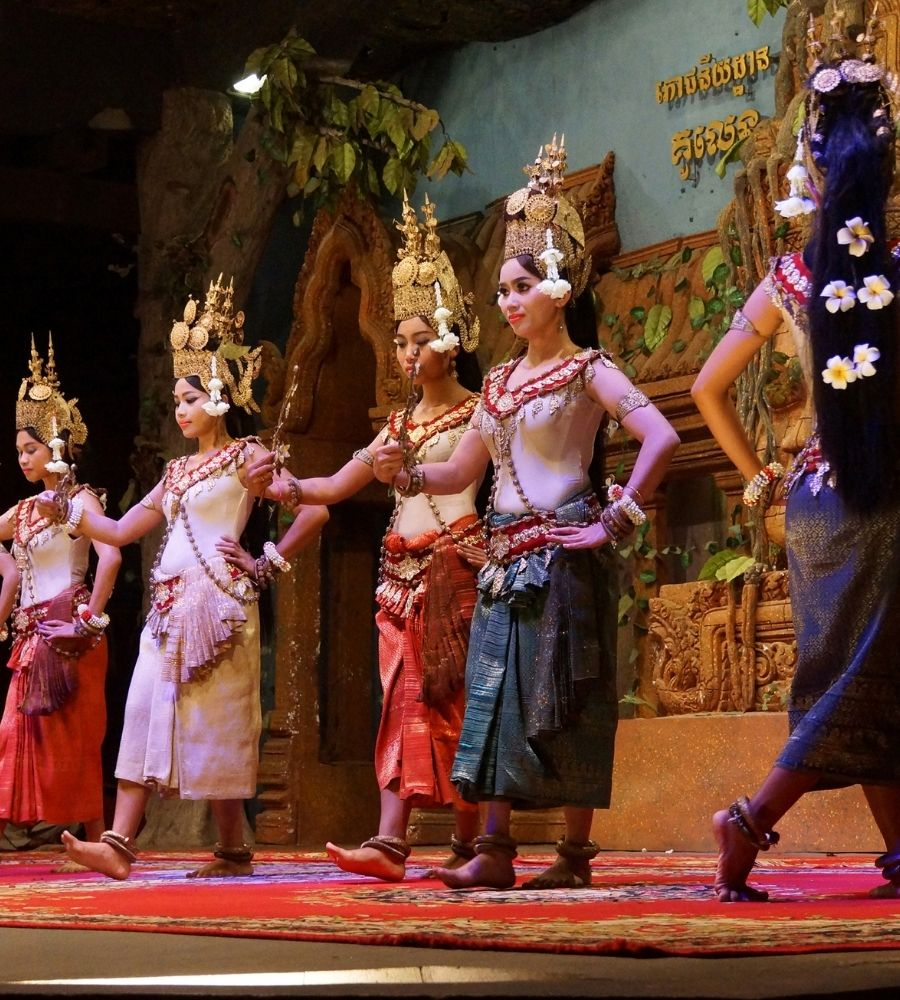
A full performance typically includes several styles of traditional Khmer dance. Classical court dance featuring the slow, precise apsara movements. Masked dance depicting scenes from the Reamker, the Khmer adaptation of the Hindu Ramayana epic. Folk dance from rural Cambodian traditions. Each dancer trains for six years to learn the classical repertoire of hand gestures and positions, with a further three to six years required to reach performance standard. The shows run for around one hour and are performed during or after dinner. They are not loud or fast-paced. They are slow, deliberate, and hypnotic. If you go expecting spectacle you may be surprised. If you go paying attention, you will not forget it.
Where to See It
Most performances are combined with dinner, typically a Khmer buffet, and range from $18 to $40 per person depending on the venue. Book ahead during peak season between November and February.
Apsara Theatre at Angkor Village Hotel: The best option in the city for anyone who wants to understand what they are watching rather than simply see it. A traditional semi-colonial timber theatre in Wat Bo Village, with low tables and cushioned floor seating. Run by Madam Net, who has been training dancers and promoting Khmer performing arts since the 1980s. A troupe of 30 artists performs three classical and two folk dances with a traditional orchestra. Souvenir booklets explain each gesture and the stories behind each piece. Show and Khmer set menu around $25 to $30 per person.
Raffles Grand Hotel d’Angkor: Buffet dinner with traditional dance and Bokator martial arts in the hotel’s garden. A more formal setting in a beautifully restored colonial property. Performance nights vary by season so check current schedules directly with the hotel.
Koulen Restaurant and Crystal Angkor Restaurant: Both are large, well-run venues popular with tour groups. Wide buffets, professional productions, and reliable quality. Better suited to those who want convenience and value over intimacy. Around $20 to $40 per person.
Practical Notes
Arrive 15 to 20 minutes before the show to choose your seat. Photography is generally permitted but avoid flash. Smart casual dress is appropriate. Tipping the dancers after the show is welcomed. Most venues allow photos with the dancers afterward.
A full listing of current venues, schedules, and prices is in the Entertainment section of SiemReapLife.com.