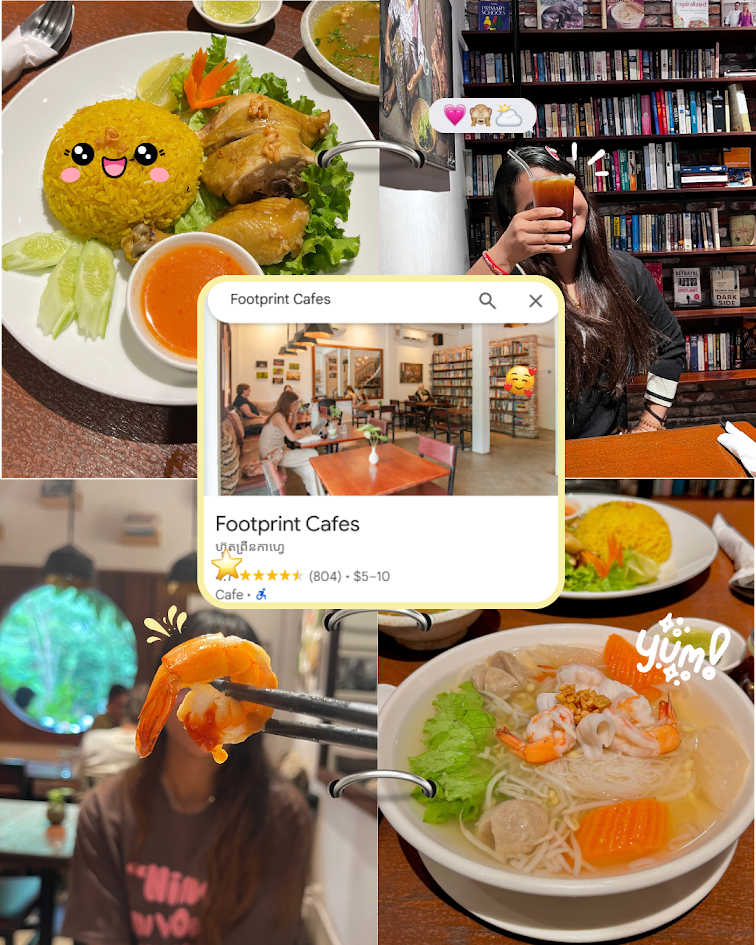

Cambodian food is one of Southeast Asia’s most underrated cuisines. Michelin-starred chef David Thompson has called it Asia’s most underrated food tradition, and anyone who has eaten properly in Siem Reap tends to agree. It is built on layers of fragrant herbs, fermented fish paste, coconut milk, and fresh produce, closer in spirit to its Thai and Vietnamese neighbours but distinctly its own. It is also, outside Cambodia, almost impossible to find done well. A cooking class in Siem Reap is one of the best ways to take something genuinely useful home from your trip.
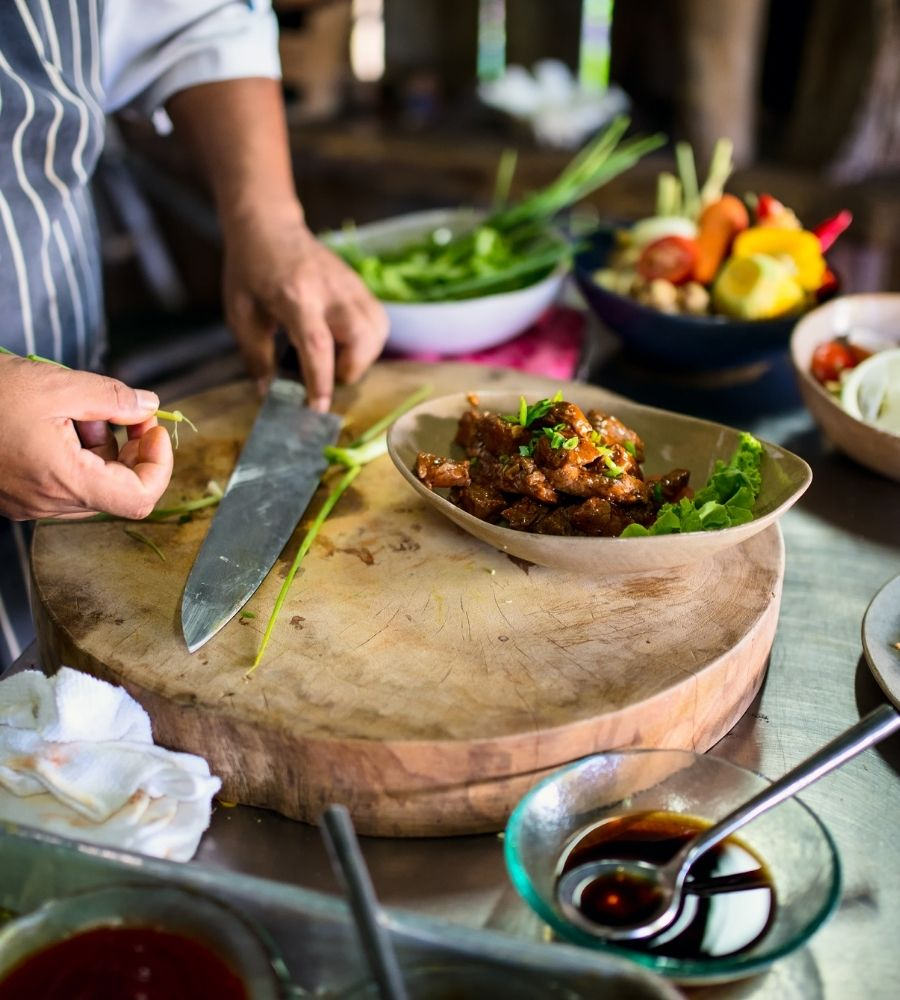
Most classes follow a similar structure: a morning visit to a local market to learn about the ingredients, followed by a hands-on session where you cook three to four dishes and then eat them. The whole thing runs three to four hours. It is suitable for complete beginners, good fun for people who already cook, and works well for families, couples, and solo travellers.
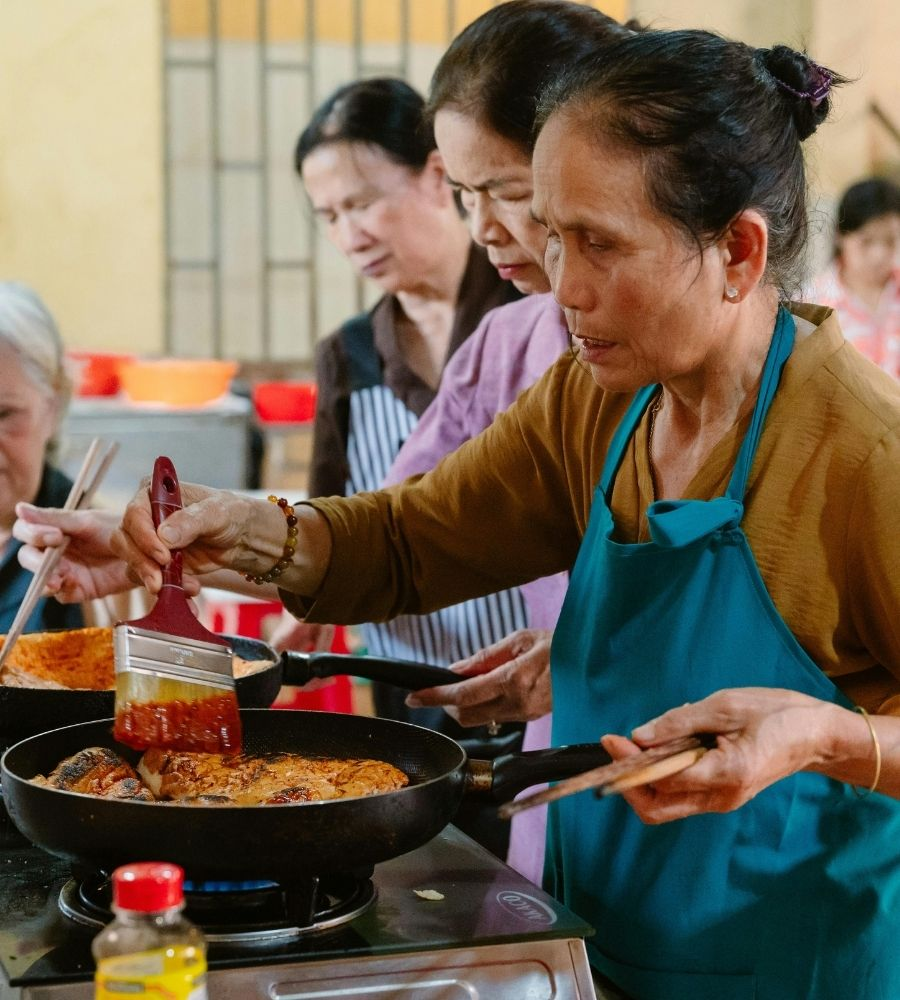
What You Will Learn
The dishes vary by class but the staples of Khmer cooking appear across almost every one. Fish amok is the dish most associated with Cambodia, a smooth, fragrant curry steamed in banana leaf or young coconut, made with fresh fish, lemongrass, galangal, turmeric, and kroeung, the Khmer spice paste that underpins much of the cuisine. Green mango salad, banana blossom salad, chicken lok lak, and various Khmer curries appear regularly. Most classes also cover a Khmer dessert, commonly sticky rice with palm sugar and coconut, or banana in palm sugar.
You will learn how to build kroeung from scratch, how Cambodian cooking differs from Thai despite using many of the same base ingredients, and how to source substitutes for harder-to-find ingredients when you cook these dishes at home. Most operators send you home with a recipe booklet.
The Market Visit
The market component is often the most memorable part of the day. Walking through a local Cambodian market with someone who can explain what everything is, where it comes from, and how it gets used is a genuinely different experience from navigating it alone. You will see ingredients you have never encountered, try things you cannot identify, and understand the food culture of the country in a way that restaurant menus do not show you.
Where to Book
Classes fill quickly during peak season between November and February. If you have a specific date or operator in mind, book at least a few days ahead rather than on the day.
Khmer Cooking Class at a Local’s Home: The most reviewed class in Siem Reap and consistently highly rated. Run from a family home with a market visit, herb garden, and four-course meal cooked by you. Small groups, tuk-tuk pickup included, genuinely personal. The right choice if you want the full experience without a formal school setting. Around $20 to $30 per person.
Lily’s Secret Garden: Run by chef Lily from her family home five minutes from the city centre. Smaller and more intimate than most. Morning, afternoon, and private classes all include a market trip. The best option for those who want something quiet and personal rather than a group experience.
Le Tigre de Papier: One of the oldest cooking schools in Siem Reap, based near the Old Market. More structured than the home-based options, with individual cooking stations, a spice box and recipe book to take home, and a certificate. Good for those who want a more organised, school-style environment in a central location.
Changkran Khmer Restaurant: Classes run from a traditional open-air Khmer longhouse on the riverside. Chef Mongkol has been teaching here for years and the food quality is consistently strong. A good middle ground between the intimacy of a home class and the structure of a cooking school. Morning classes include a market visit.
Cambodian Countryside Cooking Class: The furthest from the city and the most immersive. Run by a charity-linked operator in a rural village, with wood-fire cooking, a herb garden visit, and a genuine countryside setting. Particularly good for families or anyone who wants to see something of rural Cambodia alongside the cooking.
Practical Notes
Most morning classes start between 7.30am and 9am and include hotel pickup by tuk-tuk. Afternoon classes are available at most operators but typically skip the market visit. Vegetarian and vegan options are available across all the operators listed above. Mention dietary requirements at the time of booking. Prices range from around $20 to $45 per person depending on the operator and what is included. A full list of cooking class operators can be found in the Activities listings on SiemReapLife.com.