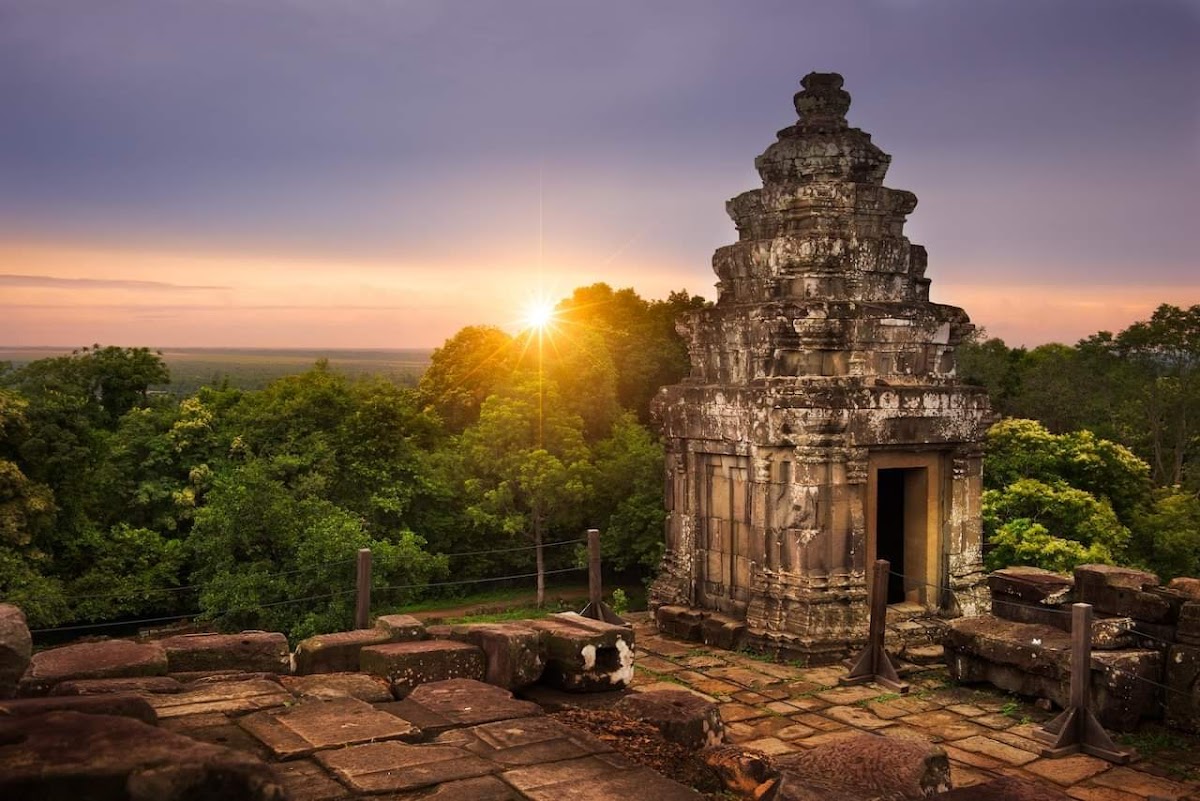
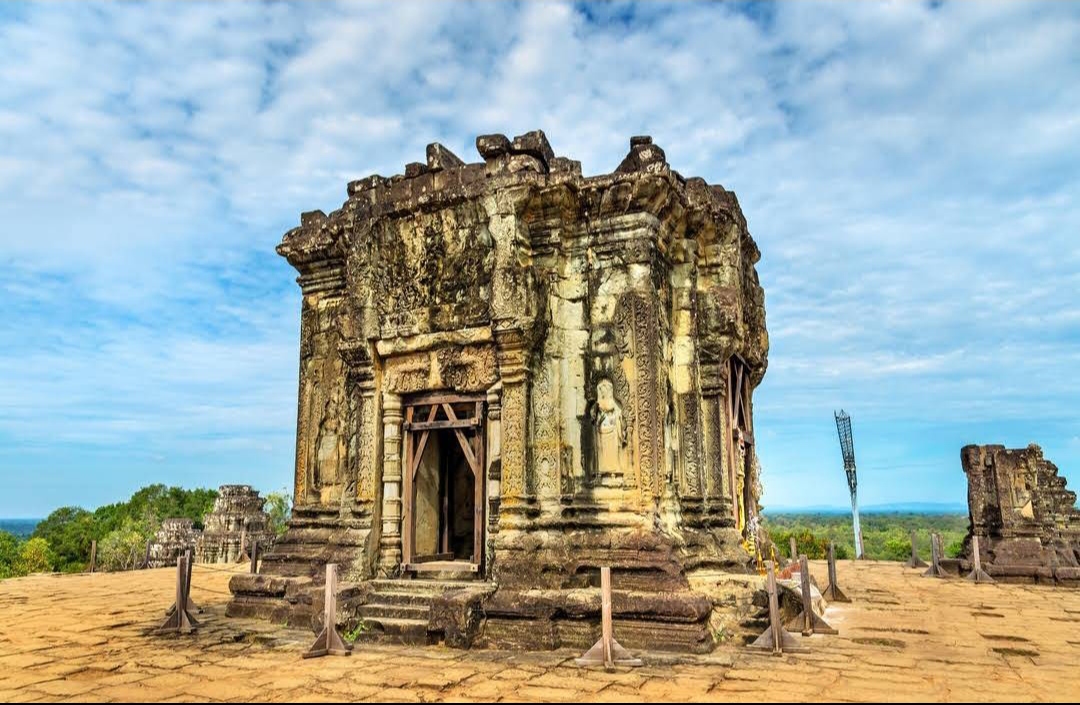
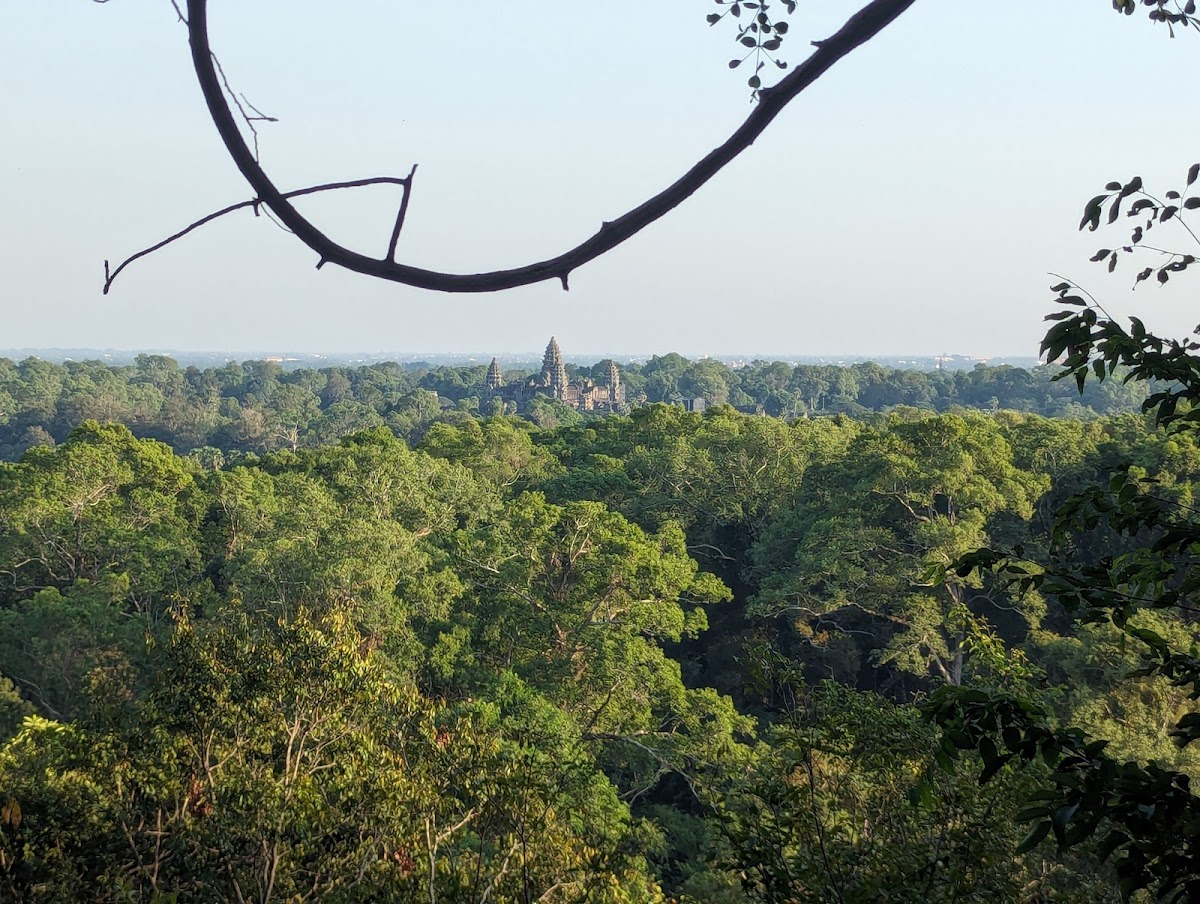
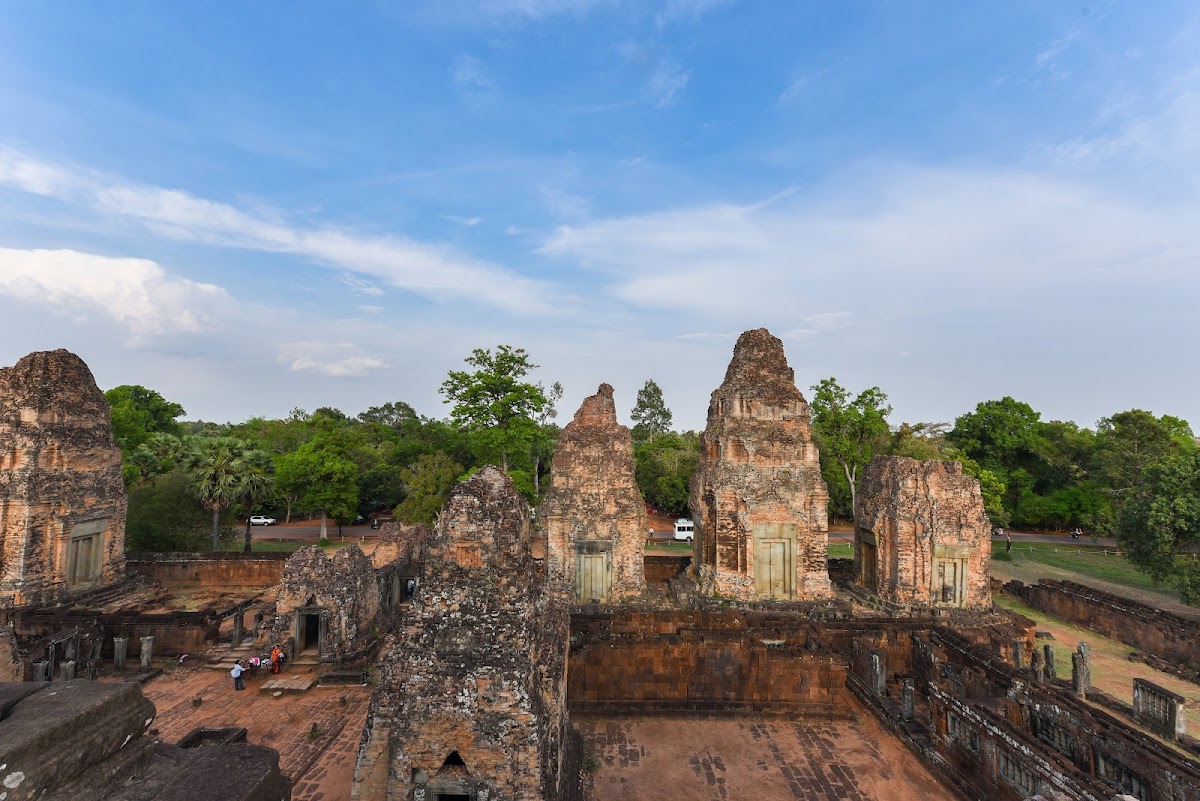
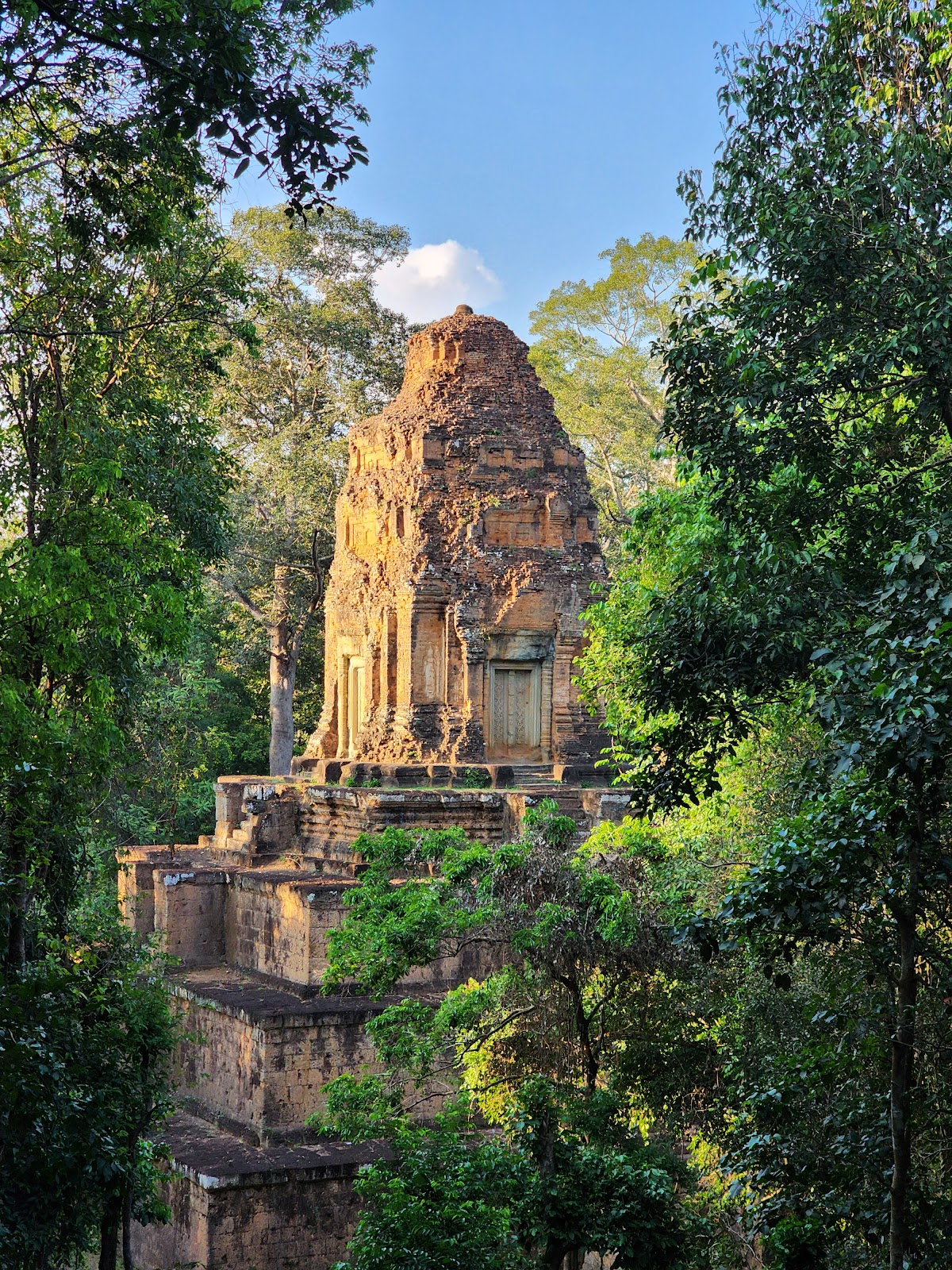
A 9th‑century Hindu temple on a hill that provides panoramic views over Angkor Wat and the surrounding plain.
Phnom Bakheng is a five‑tiered pyramid temple constructed in the 9th century and designed to symbolise Mount Meru, which is relevant for those interested in historical religious architecture and early Khmer state planning. Its location on a low hill gives line‑of‑sight views across the Angkor park, a practical feature for people who value short hikes for daytime orientation or to see how the temple complex sits within the landscape.
The site functions as both an archaeological monument and a viewpoint: the stepped terraces and central sanctuary are features of its original Hindu design, while the hilltop position creates a route and limited paths for visitors to ascend. These physical characteristics affect mobility and time on site, so they are relevant to residents weighing whether occasional visits fit into everyday routines.
Because the temple is commonly used at sunset for its panoramic sightlines to Angkor Wat, timing and light conditions are practical considerations when planning a visit from within Siem Reap. The temple’s spiritual symbolism and hilltop vantage are two facts that distinguish it from other nearby monuments and help indicate its place in the city’s pattern of cultural and recreational sites.