
Siem Reap has become one of the best shopping destinations in Southeast Asia, and it catches most visitors off guard. People arrive expecting temples. They leave with an extra bag. The city has a genuinely impressive range of shopping across markets, boutiques, galleries, and artisan workshops, and most of it is concentrated in a walkable area around the Old Market and Pub Street. The quality and originality of what is on offer here is the real story. A significant amount of it is made in Cambodia, designed in Cambodia, and sold by the people who made it. That matters both for what you take home and for where your money goes.
A good approach is to start at Artisans Angkor in the morning when the workshops are in full swing, work your way through the Old Market and The Passage at midday, browse the boutiques of Wat Bo in the afternoon, and finish at the Made in Cambodia Market or the Night Market in the evening. You can cover the best of it in a day, with time for lunch and a cold Angkor beer to spare.
Silk and Textiles
Cambodia has one of the great silk weaving traditions in the world. The ikat weave known as hol has been produced here for centuries and the patterns and techniques are unlike anything made elsewhere. The krama, a checked cotton scarf worn by Cambodians around their neck, head, or waist in a dozen different ways, is the most quintessential thing you can buy in the country. At markets you will find them from $1 to $4. They are useful, beautiful, and entirely authentic.
For silk, the single best place to start is Artisans Angkor on Stung Thmey Street, a short walk from the Old Market. This is a Cambodian social enterprise that reopened in November 2024 under new Cambodian ownership after closing during COVID. Free guided tours run daily from 7.30am to 5.30pm and take you through workshops where you can watch stone carving, wood carving, lacquering, silver plating, and silk weaving being done by hand. Everything sold is handmade by Cambodian artisans. Silk scarves run around $22 to $25. Small lacquerware pieces start from $7. Prices are fixed, fair, and transparent, and every purchase supports the artisans directly.
One important note on silk: most of what is sold at night markets and street stalls in Siem Reap comes from Thailand, Vietnam, or China rather than Cambodia. If you want genuinely Cambodian-made silk, buy from Artisans Angkor, Weaves of Cambodia, or other shops that can speak clearly to where their textiles are produced.
The Angkor Silk Farm, run by Artisans Angkor in Puok district about 20 minutes from the city, goes even further. A free guided tour shows the complete silk production process from mulberry plantation and silkworms through spinning, dyeing, and weaving. A free shuttle runs twice daily from the main workshop. Worth combining with a half-day out of the city.
Lacquerware and Ceramics
Traditional Khmer lacquerware is one of the most distinctive things you can buy in Cambodia, with roots going back to the 12th century. Pieces are finished by hand in multiple layers of lacquer and range from small decorative boxes to elaborate wall panels and paintings. Quality varies considerably across the city. Look for a smooth, deep finish, clean lines, and complexity of pattern. Artisans Angkor is a reliable starting point. Theam’s House, the home, studio, and gallery of Cambodian artist Lim Muy Theam in Veal Village, is where you will find some of the most beautiful lacquerware in Siem Reap, alongside ceramics, textiles, bronze, and silver work. Theam trained in Paris before returning to Cambodia to revive traditional Khmer crafts. His lacquered elephants have become one of the most recognisable Siem Reap souvenirs. Open daily.
Art and Galleries
Siem Reap has a genuine contemporary art scene built around a generation of Khmer artists reclaiming cultural forms suppressed under the Khmer Rouge, alongside a long-standing community of international artists who have made the city home.
Theam’s House is the most distinctive gallery in the city and worth visiting whether you plan to buy or not. The Siem Reap Art Center Night Market on the east bank of the river is a strong evening option for original paintings, sculpture, handmade crafts, and Apsara dance performances. For photography, American photographer John McDermott has been documenting Angkor since the mid-1990s and his infrared black and white prints are among the most recognised images of the temples anywhere. His work is currently exhibited at the Park Hyatt Siem Reap.
Clothing and Fashion
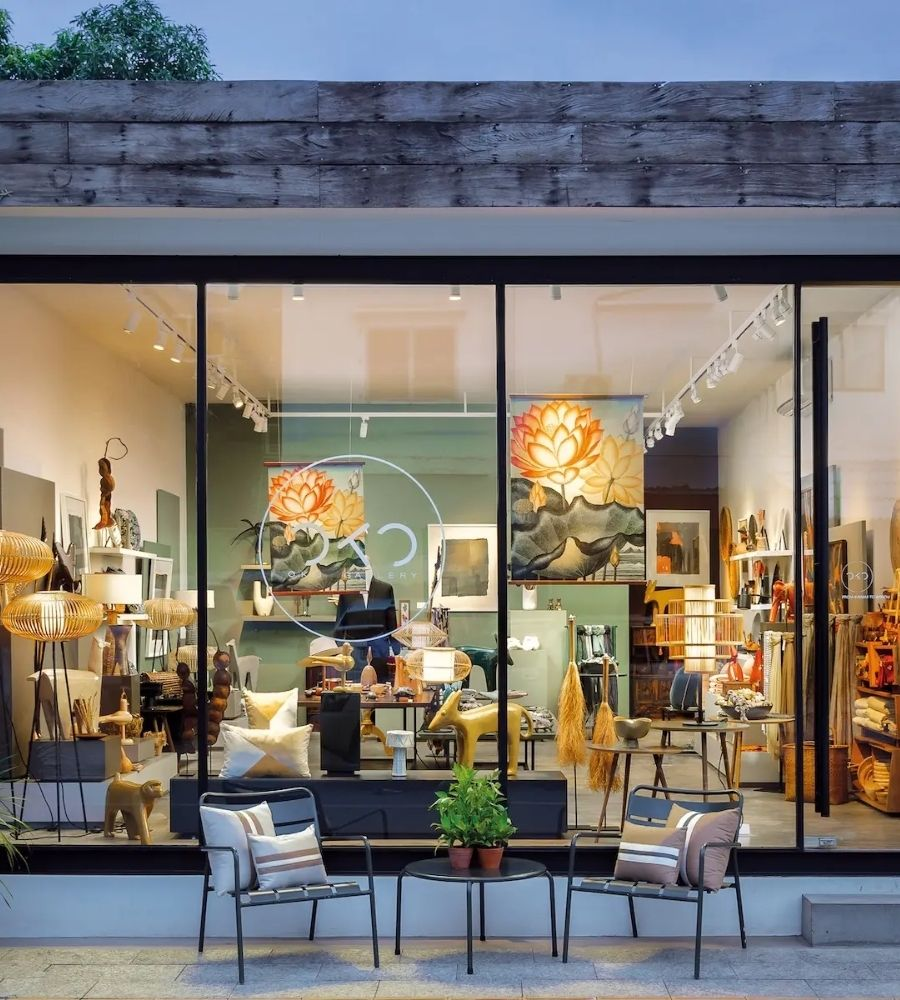
Siem Reap has a more interesting fashion scene than most visitors expect. The Passage, a boutique-lined laneway near the Old Market, is the best place to start. You will find linen shirts, cotton dresses, resort wear, and pieces made from traditional Cambodian fabrics worked into contemporary cuts. Most items are made locally or regionally and prices are genuinely reasonable.
For something more exceptional, Madagascar-born designer Eric Raisina has been based in Siem Reap since the late 1990s and his work, bold, colourful, and rooted in Cambodian silk weaving traditions, has earned recognition internationally. His couture house is on Charles de Gaulle Avenue.
Smateria, founded by two Italian expats, produces bags, accessories, and homewares made from recycled materials by local artisans. Practical, original, and ethically made.
Jewellery
There are several good jewellery shops in Siem Reap, from small workshop studios selling handmade silver pieces to boutiques carrying designs set with local gemstones. Cambodia is a source of rubies, sapphires, and zircon and you will find these worked into both traditional and contemporary designs at Artisans Angkor and independent jewellery shops throughout the central area. Buy from shops that can speak clearly to the provenance of their stones.
Shopping with Purpose
Weaves of Cambodia, located in a contemporary store attached to the Angkor Hospital for Children, sells handwoven textiles, garments, accessories, and woven products made by disabled weavers from Preah Vihear province. Proceeds go directly to the hospital, which provides free medical care to Cambodian children. The textiles are beautiful and every purchase goes somewhere genuinely useful.
Artisans Angkor, Theam’s House, Smateria, and Weaves of Cambodia are all examples of what good shopping in Siem Reap can look like. The city makes it relatively easy to spend money that does real good.
Markets
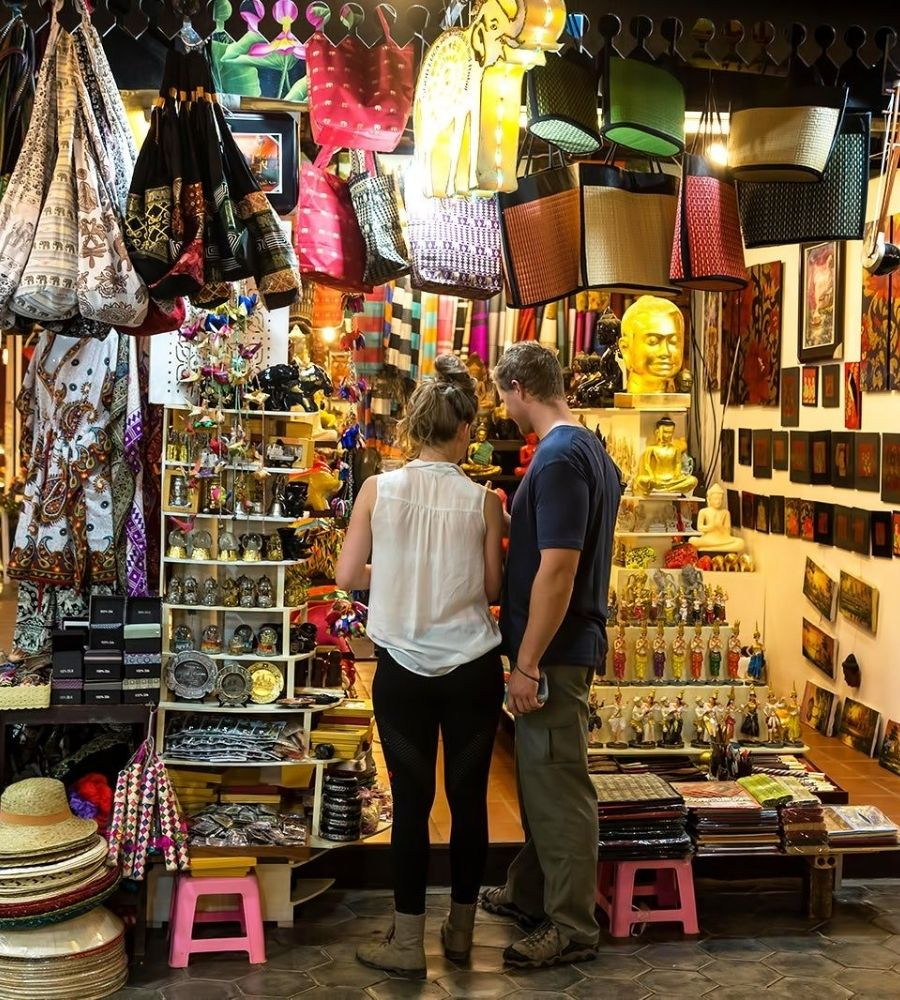
The Old Market, known locally as Phsar Chas, is the historic heart of shopping in Siem Reap. The outer ring faces tourists with stalls selling souvenirs, silk, and crafts. The inner section is a working local market where Cambodians buy fresh produce, meat, fish, and everyday goods. Both sections are worth exploring.
The Made in Cambodia Market runs several evenings a week near the Old Market and focuses specifically on locally produced goods from Cambodian artisans and social enterprises. This is one of the better places to shop with confidence that what you are buying is genuinely made here.
The Night Market along the river is worth an evening browse for atmosphere as much as shopping. Take your time and look past the obvious tourist items. There are original pieces among the standard inventory if you are willing to look for them.
What to Watch Out For
A significant proportion of textiles, carvings, and craft items sold at street stalls and night markets in Siem Reap are produced in China, Vietnam, or Thailand and imported. This does not make them worthless but it does mean they are not what they are often presented as. If authenticity matters, buy from shops that can tell you clearly where and by whom something was made. If the same item is stacked in identical quantities at five stalls next to each other, that is your answer.
Prices at established boutiques and social enterprise shops are fixed. At markets, negotiating is normal and expected. Keep it good-natured and reasonable.
Practical Notes
US dollars are accepted everywhere in the central shopping area. Riel is useful for small purchases and change. Cards are increasingly accepted at boutiques but smaller stalls are cash only. A full list of recommended shops, boutiques, and markets can be found in the Shopping listings on SiemReapLife.com.