
Kbal Spean
Most archaeological sites in Cambodia are made of stone rising above the ground. Kbal Spean is made of stone beneath the water. For a stretch of around 200 metres, the sandstone bed of the Stung Kbal Spean river was carved by 11th century hermits into a gallery of lingas, yonis, and Hindu deities. The water that flows over these carvings was believed to be sanctified by them, flowing down from the sacred Kulen Hills to bless the Angkor plain, its temples, and its rice fields. That river still flows. It still passes over the same carvings. A version of that blessing is still happening.
The site was not discovered until 1968 when French researcher Jean Boulbet cleared it and documented what was there. For nearly a thousand years it sat in the jungle, known to local hermits and pilgrims but invisible to the outside world.
Getting there requires a hike. That is part of what makes it worth doing.
The Carvings
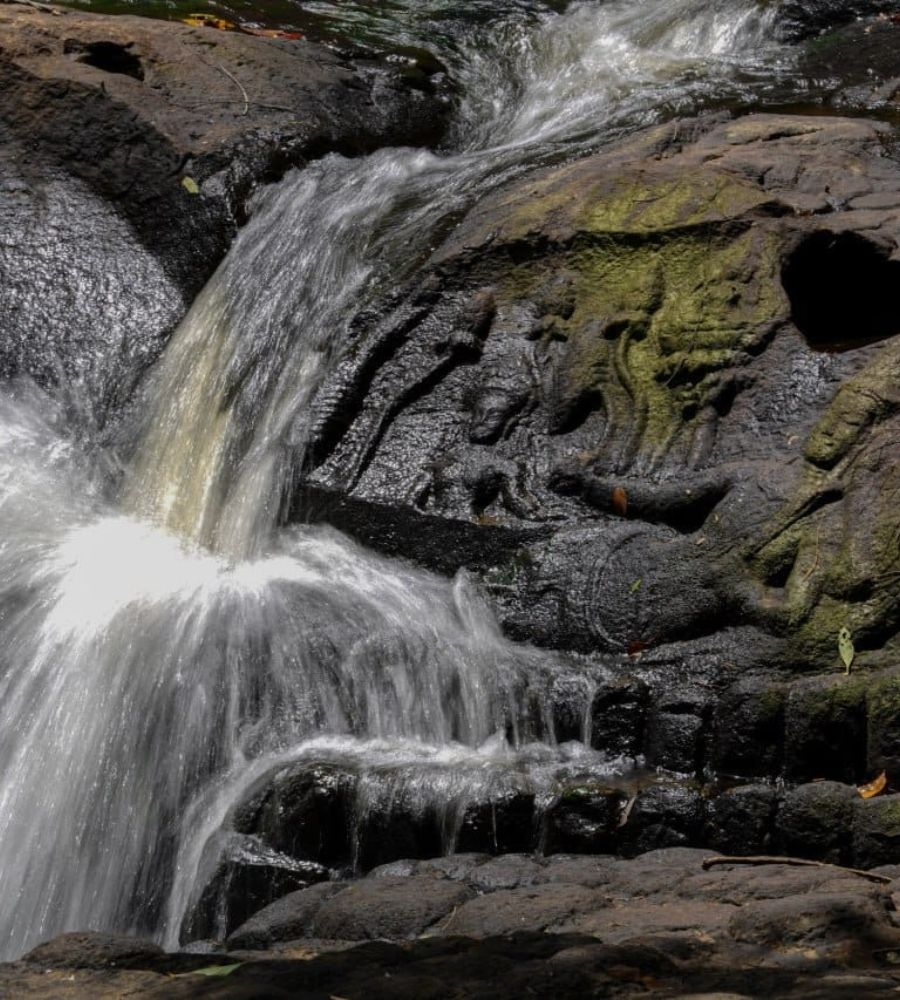
The main carved section begins upstream and runs down to a small waterfall. Look into the clear shallow water and you will see rows of lingas, square phallic symbols representing Shiva, carved in a quincunx pattern into the riverbed. Between them are yonis, feminine symbols, and carved figures of Vishnu lying on a serpent in the middle of the cosmic ocean, with Brahma emerging from his navel on a lotus. The carvings of the Hindu trinity, Vishnu, Shiva, and Brahma, appear together in the riverbed in a composition of considerable artistic ambition given that the medium is a river bottom.
The lingas are most visible in the dry season when water levels drop and the carving detail is clearest. In the wet season the water is higher and faster and some of the detail is obscured, but the waterfall is more dramatic and the jungle around it is more vivid. Both seasons offer something different.
The Hike
The trail from the car park to the carvings is approximately 1.5 kilometres uphill through jungle. It is one of the more pleasant walks in the Siem Reap region, shaded by tall trees, with birdsong overhead and the sound of the river growing louder as you climb. The walk takes around 45 minutes at a comfortable pace. It is not technically difficult but it is uneven, involves tree roots and some rocky sections, and is humid even in the shade. In the wet season parts of the trail can be slippery.
Do not wear flip-flops or flat sandals. Bring at least one to two litres of water per person. Insect repellent is essential.
The Waterfall
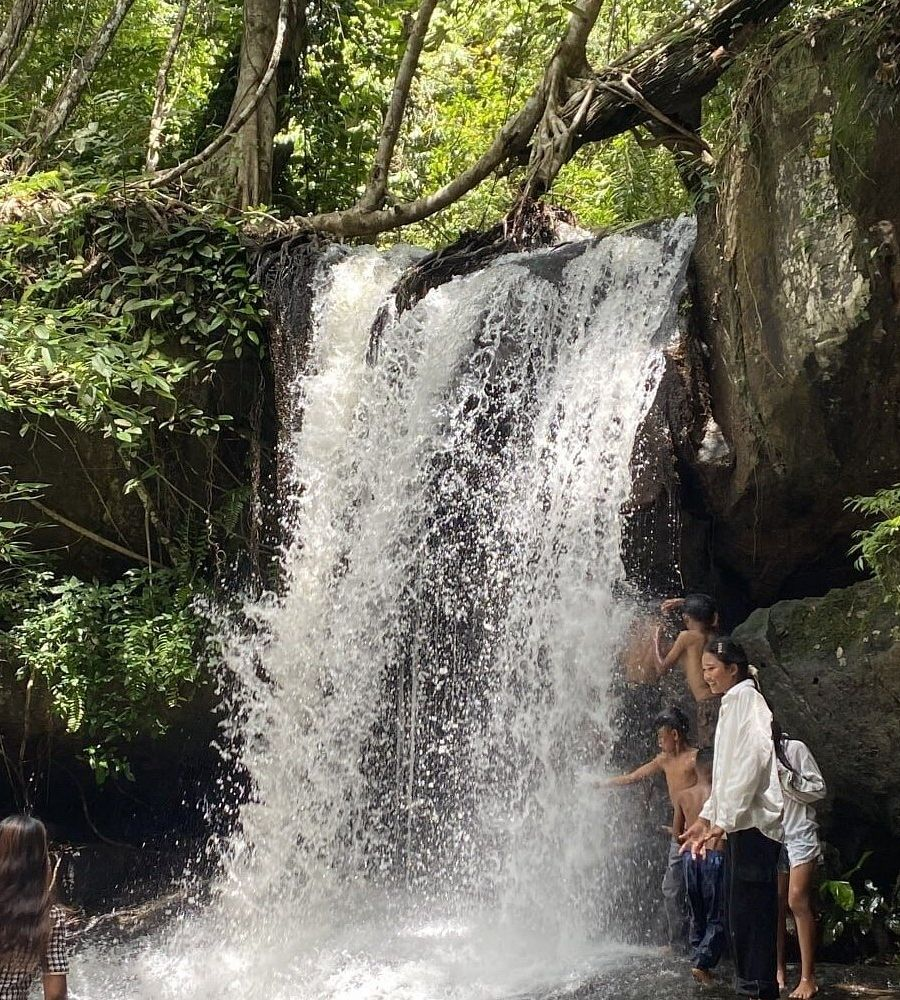
At the downstream end of the carved section the river drops over a small waterfall into a clear pool framed by jungle. After 45 minutes of hiking and time spent crouching over the riverbed examining carvings, it is a genuinely welcome arrival. The light filters through the canopy, the water is cool, and on a quiet morning it is one of the most peaceful spots in the entire Angkor region. Swimming is not permitted but sitting here for ten minutes before heading back down is time well spent.
Practical Information
Kbal Spean is covered by the Angkor Pass. No separate ticket is required. Open 7.30am, last entry 3pm. The 3pm cutoff is strict. Plan your day accordingly.
Kbal Spean is approximately 50 kilometres northeast of Siem Reap, around one hour by private car. The road from Siem Reap to Banteay Srei is sealed and in good condition. From Banteay Srei the final stretch to the Kbal Spean car park is also sealed but can have potholes.
The most natural combination is Banteay Srei in the morning and Kbal Spean in the early afternoon, returning to Siem Reap by late afternoon. Allow around three hours at Kbal Spean including the hike. The Cambodian Landmine Museum and the Angkor Centre for Conservation of Biodiversity are both on this road and worth including if you have time.
Tuk-tuks can reach the car park at Kbal Spean but the drive is long and exposed. A private car with air conditioning is the more comfortable option for the full day.