

Is it Better to Go to Siem Reap or Phnom Penh?
Both. If you have the time, visit both. They are five hours apart by road or less than an hour by air, they are completely different from each other, and together they give you a much fuller picture of Cambodia than either one does alone. Most visitors to Cambodia end up in both cities on the same trip and that is the right call.
But if you have to choose, here is the honest answer from people who live in Siem Reap and know Phnom Penh well.
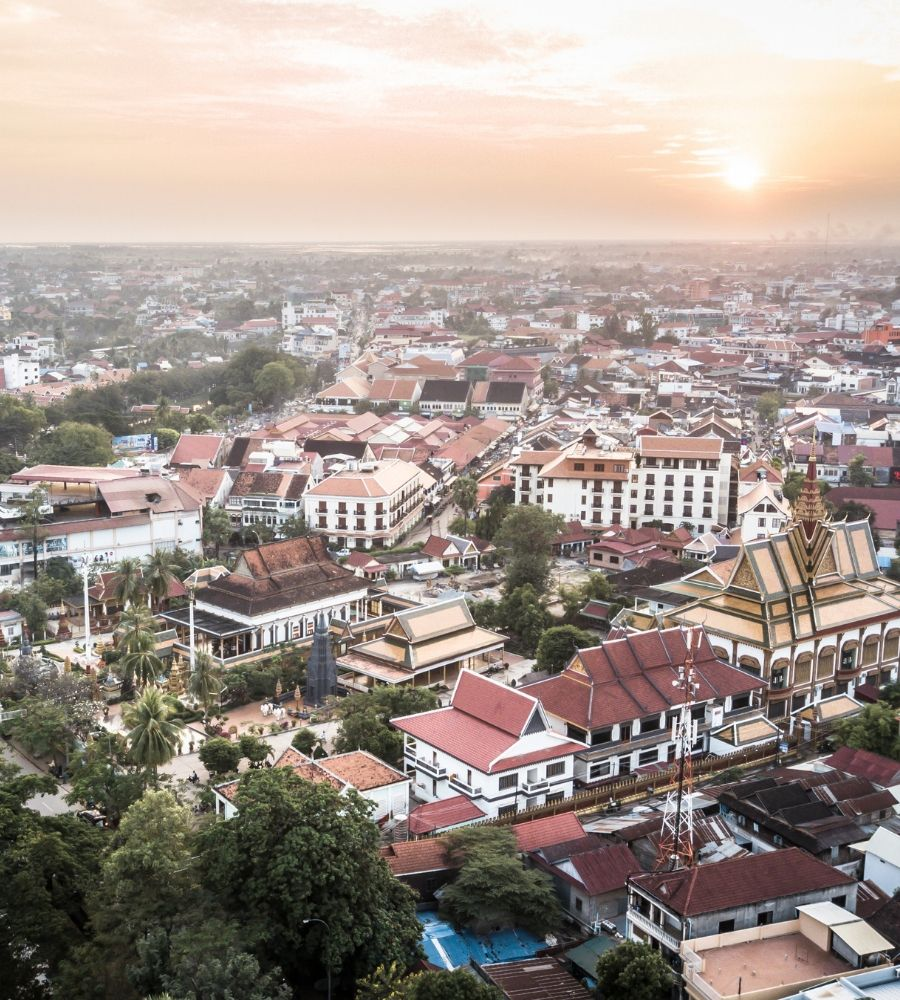
Choose Siem Reap if:
You are coming primarily for Angkor. There is no version of this conversation where Phnom Penh competes with the Angkor Archaeological Park. The largest religious monument complex ever built, covering 400 square kilometres, containing over 70 temple sites, is in Siem Reap. If temples are the reason you are coming to Cambodia, this is where you go.
You want a relaxed, walkable city. Siem Reap is compact, easy to navigate, and built around the visitor experience without having lost its character. You can walk from your hotel to dinner to the night market to a bar and back again. The pace is slower. The streets are quieter. The stress level is lower.
You have a week or less. Most people who visit Cambodia for a week or less are right to spend the majority of that time in Siem Reap. The temple complex alone justifies two to three days. The city and surrounding region, the Tonle Sap, Phnom Kulen, Beng Mealea, Banteay Srei, offers several more. A week in Siem Reap is a full week.
You want cultural depth. Siem Reap was named ASEAN City of Culture for 2021 to 2022. Phare the Cambodian Circus, the apsara dance traditions, the cooking schools, the Buddhist blessing experiences, Artisans Angkor, and the broader living culture of the Angkor region are all here.
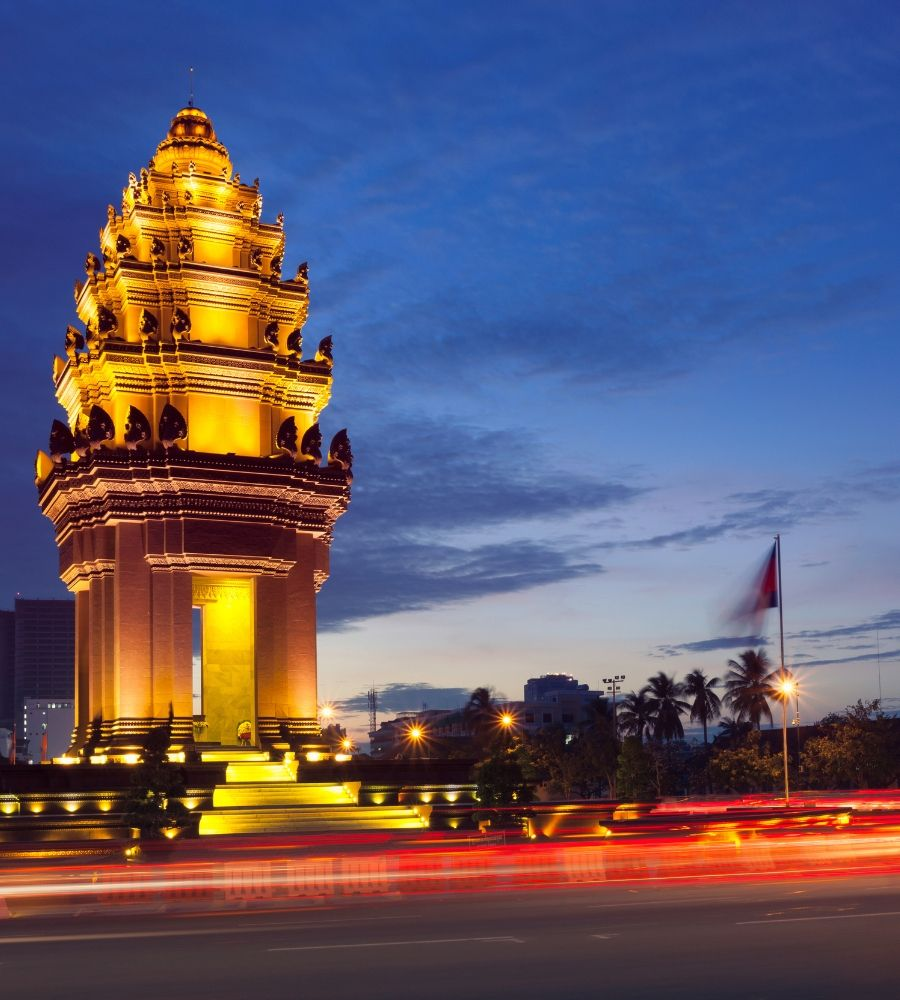
Choose Phnom Penh if:
You want to understand modern Cambodia. Phnom Penh is the capital, the economic engine, and the place where contemporary Cambodian life is most visible. The Royal Palace, the National Museum, the riverfront along the Mekong, the Art Deco Central Market, and an emerging restaurant and art scene that has accelerated significantly in the past five years all reflect a city moving fast. It is rawer and more chaotic than Siem Reap and considerably more interesting as a result if urban energy is what you are looking for.
You want to understand Cambodia’s recent history. The Tuol Sleng Genocide Museum, formerly the S-21 prison where thousands were tortured and killed under the Khmer Rouge, and the Killing Fields of Choeung Ek are both in Phnom Penh. These are harrowing and important places. Visiting them is not comfortable. It is worth doing. No visit to Cambodia that skips this history is fully honest about where you are and what happened here. Siem Reap does not have an equivalent.
You prefer urban energy. Phnom Penh is bigger, louder, and more chaotic than Siem Reap. More traffic, more noise, more of the friction that comes with a capital city of over two million people. Some visitors find that friction energising. Others find Siem Reap’s quieter pace the better fit. Know which one you are before you decide.
How to Do Both
The most common itinerary is to fly into one city, spend three to four days, travel overland or by air to the other, spend two to three days, and fly out. The bus between Siem Reap and Phnom Penh takes around five hours on a comfortable air-conditioned coach and costs around $15. The flight takes under an hour and costs from around $40. Either works.
A slower and more memorable alternative is the boat between Siem Reap and Battambang, a full day on the water through the Tonle Sap floodplain. Floating villages, bird life, fishermen pulling nets, flooded forest stretching to the horizon. It is one of the most distinctly Cambodian experiences available and most people who do it describe it as a highlight of their trip. From Battambang it is a short road journey to Phnom Penh. This is not the fastest option. It is one of the best days you can spend in the country.
The Honest Answer
Siem Reap has Angkor. Nothing in Cambodia or Southeast Asia competes with that. Phnom Penh has depth, complexity, and the kind of urban energy that Siem Reap deliberately does not. If you only have time for one, and the temples are the reason you came, Siem Reap. If you have two weeks and want to understand the country rather than just visit its most famous site, do both.